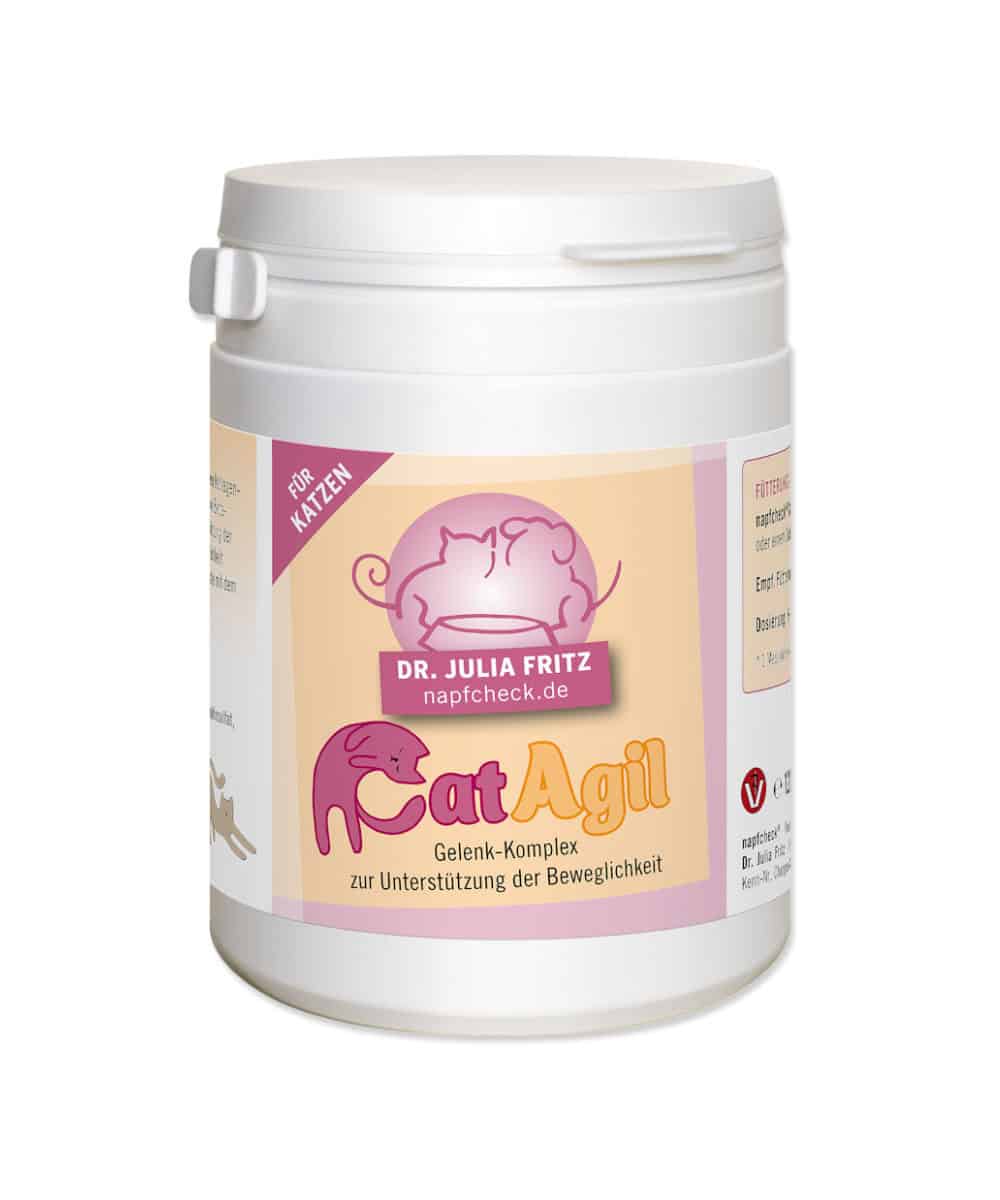
napfcheck CatAgil – Joint Complex with Collagen, Glucosamine, and Chondroitin
Joint diseases such as osteoarthritis are much more common in cats than was long believed—yet they often go undiagnosed. Scientific studies show that many older cats, as well as younger ones, develop changes in their joints. In cats over the age of twelve, approximately 90% show radiographic or clinical signs of degenerative joint changes (Hardie et al., 2002), which may be associated with chronic pain.
Unlike dogs, however, cats usually show very few outward signs of pain, which makes early detection even more difficult. Typical early signs are not lameness, but rather behavioral changes and changes in lifestyle (see also “Good to Know”).
Collagen, glucosamine, and chondroitin are natural components of cartilage, synovial fluid, and connective tissue, and play a key role in maintaining joint stability and elasticity. In cases of joint problems, they can help support cartilage metabolism, reduce inflammation, and promote mobility in cats.
- As a feeding supplement for joint problems and degenerative and inflammatory diseases (e.g. osteoarthritis, arthrosis)
- To maintain mobility (e.g. in older animals)
- Scientifically tested raw materials
- Contains effective bioactive collagen peptides, glucosamine and chondroitin
- Contains beta-glucans derived from the cell walls of natural yeast (Saccharomyces cerevisiae) to support the immune system
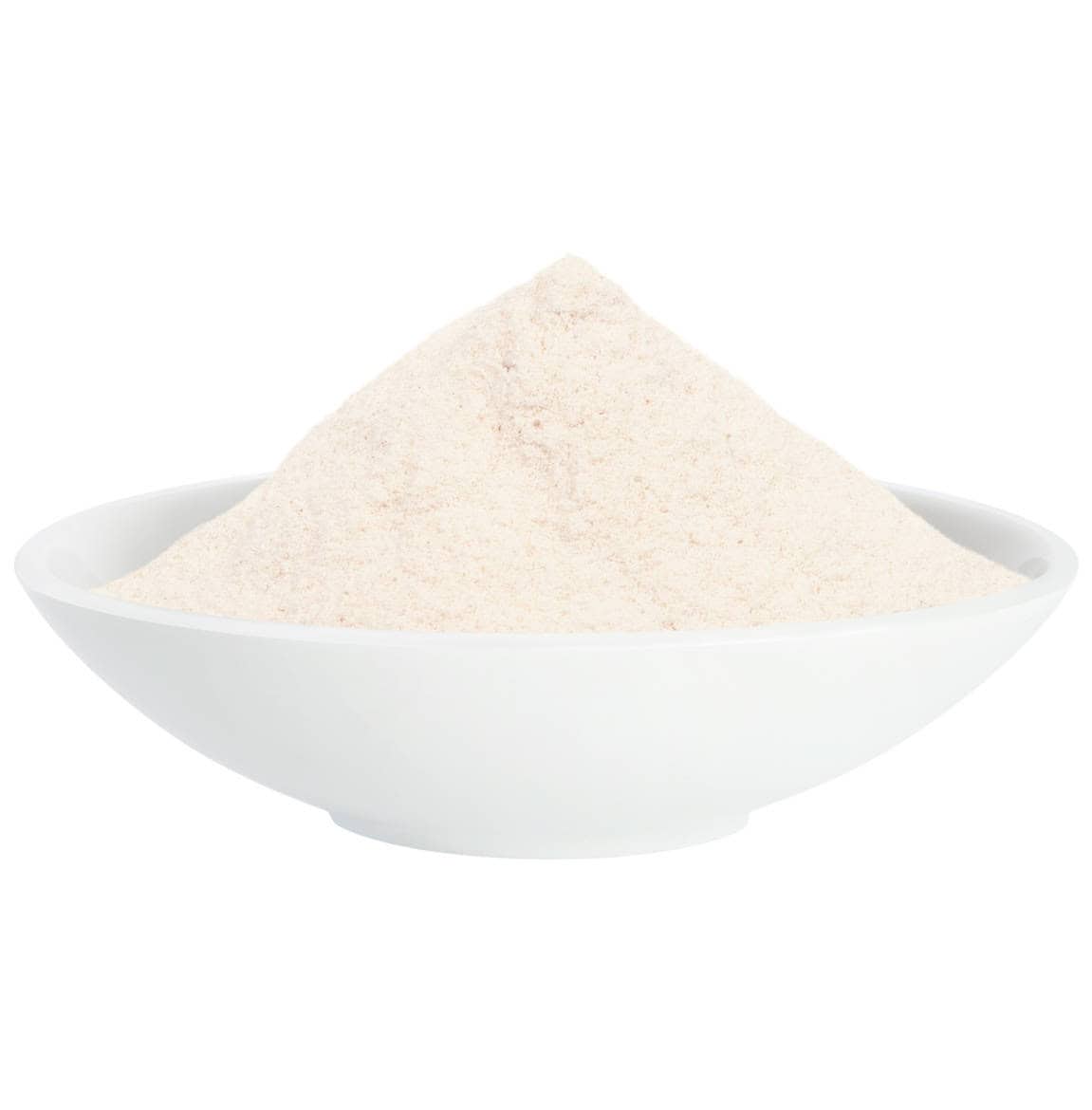
- In powder form for practical administration with the daily feed
- Developed by a veterinarian
Have you heard of thenapfcheck podcast yet?Episode 2 is about cat nutrition, andEpisode 24 is a special cat nutrition check. Feel free to give it a listen.
The development of demand-oriented supplementswhich also include further quality features such as compatibility and acceptance is our claim.
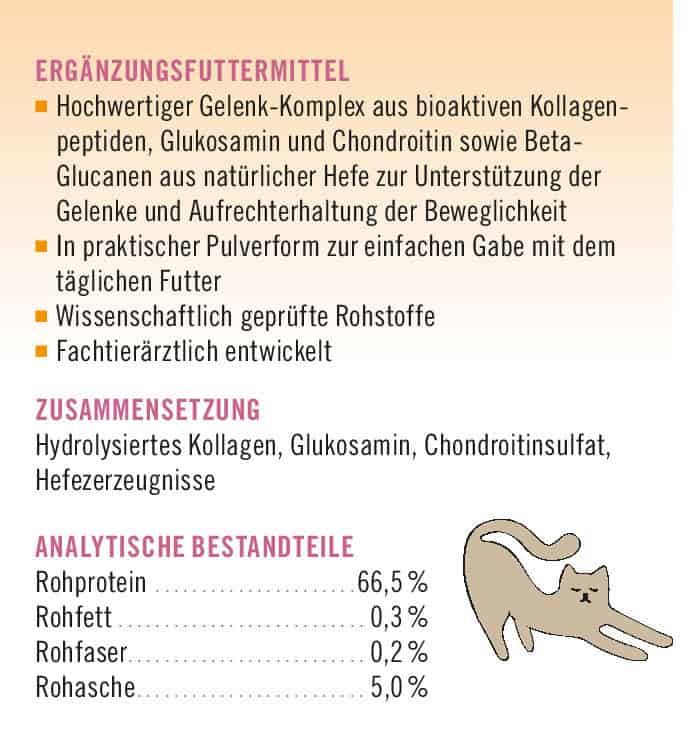
Composition: Hydrolyzed collagen (100% pork), glucosamine, chondroitin sulphate, yeast products (source of beta-1,3/1,6-glucans)
Analytical constituents:
- Protein: 66.5 %
- Fat content: 0.3 %
- Crude fiber: 0.2 %
- Crude ash: 5.0 %
Cat supplement – includes measuring spoon
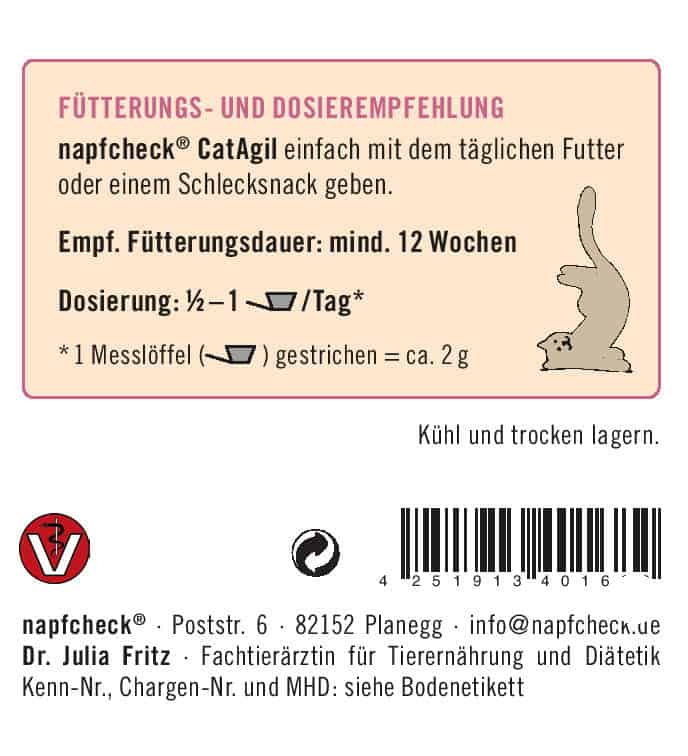
Feeding recommendation: Simply mix napfcheck CatAgil into your cat’s daily food or serve it as a treat.
Recommended daily dose: 1/2 – 1 measuring spoon*
*1 level measuring spoon = approx. 2 g
Recommended feeding period: at least 12 weeks
Yield: One can lasts 2–4 months.
How can you tell if your cat has joint problems or arthritis?
Joint disorders such as osteoarthritis are significantly more common in cats than previously thought and often go undetected. Studies show that a large proportion of older cats—as well as younger ones—already exhibit changes in their joints. Unlike dogs, cats usually show signs of pain in very subtle ways.
Typical early signs are not lameness, but changes in behavior: The cat jumps less frequently or to lower heights, avoids windowsills or scratching posts, takes longer to lie down or get up, and generally seems less active. Reduced grooming, especially around the back and hips, can also be a sign. Some cats become more irritable, withdraw, or react unusually aggressively when touched.
Other signs may include:
- Stiffness when getting up (especially after periods of rest)
- Jumps less frequently or only to lower surfaces
- Hesitate before jumping, or use intermediate steps
- Avoid cat trees, windowsills, or elevated resting spots
- Problems with the litter box (difficulty getting in or out), soiling
- Less interest in playing and/or sleeping more
- Has more difficulty grooming itself (especially the back and hip area)
- More easily irritated
Scientific evidence shows that cats often compensate for pain by adopting a protective posture rather than showing it openly. As a result, joint problems are often not detected until it is too late.
Important: Even minor changes should prompt a visit to the veterinarian. An early diagnosis allows for targeted interventions—such as adjustments to daily routines, pain management, and a supportive diet—and can significantly improve your cat’s quality of life.
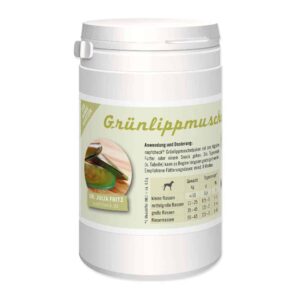
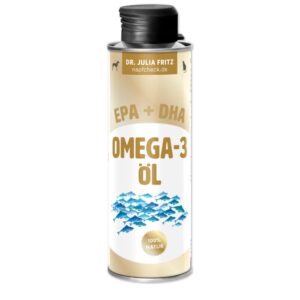
Dietary supplements such as collagen, glucosamine, and chondroitin, as well as green-lipped mussel powder, can help improve mobility. Higher doses of omega-3 fatty acids from fish oil or algae powder also provide additional benefits due to their anti-inflammatory properties.